Why Your Child's Sleep Looks Nothing Like the Guidelines — And What to Do About It
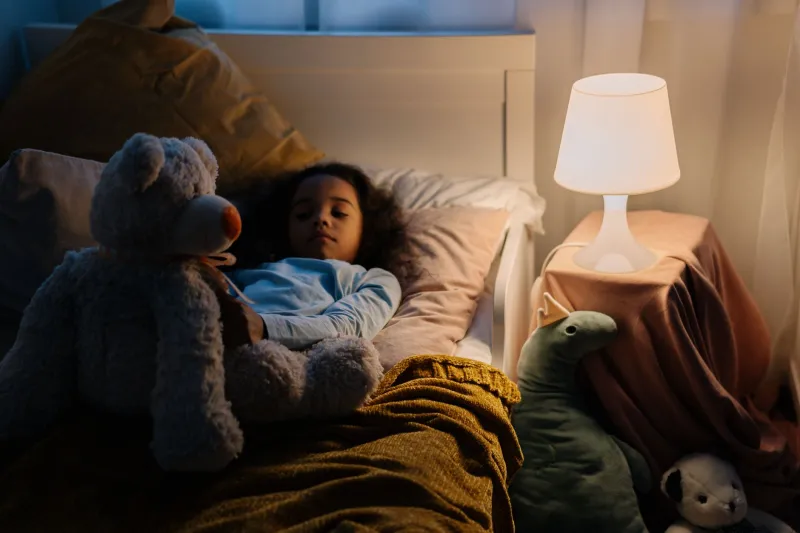
The American Academy of Pediatrics recommends that school-age children sleep between nine and twelve hours per night, with consistent bedtimes and wake times, limited screen exposure in the evening, and a quiet, dark sleeping environment. It is excellent guidance, grounded in solid developmental science.
It also describes a household that looks very little like the one most Indian American children grow up in.
This is not a criticism of Indian family culture. It is an honest acknowledgment that pediatric sleep research has, historically, been conducted primarily on Western, middle-class, nuclear households with early dinner schedules, low ambient noise, and children who sleep alone. When those findings are translated into universal recommendations, they tend to fit some families well and others poorly.
For Indian American parents navigating this gap, the result is often a cycle of guilt, inconsistency, and genuine confusion about what their child actually needs.
The Cultural Architecture of Indian American Evenings
To understand why standard sleep hygiene advice frequently falls short, it helps to map what Indian American evenings actually look like.
Dinner in many South Asian households is served between 8:00 and 9:30 p.m.—a timing that reflects both the late work hours common among first-generation immigrant professionals and the cultural tradition of the evening meal as a leisurely, communal event. Weekend gatherings with extended family or community friends routinely extend past 10:00 p.m., with children present and socially engaged throughout.
Multi-generational living arrangements—grandparents sharing a home, relatives visiting for extended stays—introduce additional variables: ambient conversation, television in common areas, and the natural disruption of household rhythms that accommodate multiple generations' schedules simultaneously.
Spiced foods, a cornerstone of South Asian cuisine, are another factor that receives insufficient attention in standard sleep guidance. Dishes containing significant amounts of cumin, chili, and other thermogenic spices can elevate core body temperature and stimulate digestive activity. Since the body's natural preparation for sleep involves a drop in core temperature, a late, heavily spiced meal can create a physiological delay in sleep onset—particularly in younger children whose thermoregulatory systems are still maturing.
What the Science of Chronotypes Reveals
One of the most important—and underutilized—concepts in pediatric sleep medicine is the chronotype: an individual's biologically determined tendency toward earlier or later sleep timing. Research consistently demonstrates that chronotypes are partly heritable, meaning they run in families. Studies conducted across South and East Asian populations have found a measurable population-level tendency toward later chronotypes compared to Northern European samples.
This matters because it suggests that the later sleep timing observed in many Indian American households is not simply a cultural habit that can be corrected with sufficient discipline. For some children, it may reflect a genuine biological predisposition that, while it can be modulated, cannot be entirely overridden without cost.
A 2019 study published in Sleep Medicine Reviews found that forcing children with late chronotypes into early sleep schedules—without addressing the underlying biological timing—often resulted in reduced total sleep duration rather than earlier sleep onset. The child simply lay awake longer, accumulating frustration and, in some cases, developing negative associations with the sleep environment itself.
Practical Strategies That Honor Both Science and Culture
The goal is not to choose between pediatric best practices and cultural reality. It is to find the intelligent intersection between them.
Anchor the morning, not just the evening. Sleep research increasingly emphasizes that consistent wake time is more important than consistent bedtime in regulating the circadian system. If a family cannot reliably achieve an 8:30 p.m. bedtime on weeknights, maintaining a consistent 7:00 a.m. wake time—even on weekends—can do significant work in stabilizing the child's sleep architecture.
Create a pre-sleep buffer after late dinners. When dinner ends at 9:00 p.m., the transition to sleep should not be immediate. A thirty-to-forty-five-minute wind-down period—low light, quiet activity, no screens—allows the digestive system to settle and core body temperature to begin declining. This buffer is physiologically meaningful, not merely ritualistic.
Manage spice timing rather than eliminating spice entirely. There is no pediatric justification for removing turmeric, cumin, or other culturally significant spices from a child's diet. However, reserving the most thermogenic dishes—heavily chili-spiced curries, for example—for earlier in the day, and serving lighter, less stimulating evening meals when possible, can meaningfully reduce the physiological delay in sleep onset.
Design sleep-conducive micro-environments within complex households. In multi-generational homes, complete household silence by 9:00 p.m. may be neither realistic nor desirable. White noise machines, room-darkening curtains, and the strategic placement of a child's sleeping space away from common areas can create a functional sleep environment without requiring the entire household to reorganize around one child's schedule.
Protect total sleep duration as the primary metric. If a child consistently achieves nine to ten hours of sleep—even if that sleep runs from 10:00 p.m. to 7:30 a.m. rather than 8:30 p.m. to 6:00 a.m.—the developmental outcomes are broadly comparable. Timing matters, but total duration and sleep quality are the variables with the strongest developmental consequences.
When to Seek Clinical Support
Not every sleep difficulty in Indian American children is cultural in origin. Persistent difficulty falling asleep despite appropriate conditions, frequent nighttime waking in children beyond toddlerhood, habitual snoring, or significant daytime sleepiness despite adequate nighttime sleep duration are all signs that warrant a conversation with your child's pediatrician.
At Sukhayu Children's Hospital, our approach to pediatric sleep is grounded in the understanding that families are not interchangeable. The recommendations we offer are calibrated to the actual lives our patients live—not to an idealized household that bears little resemblance to theirs. Sustainable sleep health is built on that foundation.