Light, Air, and Dinner: How the American Environment Quietly Shapes Your Child's Health
When Indian families relocate to the United States, they carry with them not only their traditions and values but also a set of embodied health practices shaped by a specific geography. The rhythms of the Indian subcontinent—its intense sunlight, its seasonal monsoon patterns, its characteristic foods, its culture of outdoor communal life—have informed South Asian wellness traditions for millennia. American life, for all its advantages, operates according to a genuinely different set of environmental rules. For children growing up at this intersection, the gap between inherited wellness wisdom and actual lived environment can have quiet but meaningful health consequences.
This is not a cause for alarm. It is, however, a call for awareness—and for the kind of thoughtful adaptation that allows families to preserve what is valuable in their traditions while responding intelligently to where they actually live.
The Sunlight Problem: Vitamin D in American Latitudes
Indian wellness traditions have never needed to address vitamin D deficiency explicitly, because the Indian subcontinent sits between approximately 8 and 37 degrees north latitude, receiving intense, year-round ultraviolet radiation. The body synthesizes vitamin D through sun exposure, and in India, even modest time outdoors typically provides adequate synthesis.
Much of the United States lies significantly farther north. Cities like Chicago, Minneapolis, Boston, and Seattle receive insufficient UVB radiation for vitamin D synthesis during the winter months—sometimes for as long as five to six months annually. Families who have relocated from South Asia to these latitudes frequently do not adjust their sun exposure habits to compensate, because the need for adjustment was never part of their cultural health framework.
The result is a well-documented pattern: children of South Asian descent in the United States show disproportionately high rates of vitamin D deficiency. This matters because vitamin D plays a foundational role in bone development, immune regulation, and mood stability. Pediatricians at Sukhayu Children's Hospital routinely screen for vitamin D status in children from Indian backgrounds, and many families are surprised to learn that their child's levels are suboptimal despite what appears to be a healthy diet.
The practical response involves a combination of supplementation, mindful dietary choices—including vitamin D-fortified foods—and deliberate outdoor time during peak sun hours, particularly in warmer months.
Artificial Light and the Disruption of Circadian Rhythms
Traditional Indian households, particularly in earlier generations, organized daily life around natural light. Waking at sunrise, winding down after sunset, sleeping in alignment with darkness—these patterns were not deliberate wellness choices so much as practical responses to an environment without ubiquitous artificial lighting.
Contemporary American life presents an almost inverted model. Bright overhead lighting, glowing screens, and the cultural normalization of late-night activity mean that children's circadian rhythms are regularly disrupted from an early age. This is not a problem unique to Indian American families, but it intersects with specific cultural patterns in ways worth noting.
Many Indian American households maintain active evening social lives—extended family dinners, religious observances, community gatherings—that frequently run past the sleep windows optimal for children. Combined with the pull of screens and the academic pressure that many Indian American children navigate, late bedtimes become structurally embedded in family life.
The science on pediatric sleep is unambiguous. Children between the ages of 6 and 12 require nine to twelve hours of sleep per night; teenagers need eight to ten. Chronic sleep insufficiency impairs attention, emotional regulation, immune function, and metabolic health. Reducing evening screen exposure—particularly blue-light-emitting devices—at least ninety minutes before bedtime is among the highest-yield behavioral interventions available to families.
Air Quality: An Invisible Variable
India and the United States both contend with air quality challenges, but the specific character of air pollution differs considerably between regions and contexts. In many American suburban and rural areas, outdoor air quality is substantially better than in Indian metropolitan centers. However, indoor air quality in American homes—tightly sealed for energy efficiency, often with limited natural ventilation—can harbor its own set of concerns: volatile organic compounds from synthetic materials, dust mites, mold, and pet dander.
For children with asthma or allergic predispositions—conditions that appear at elevated rates in South Asian children—indoor air quality is a clinical consideration, not merely an aesthetic one. Families accustomed to cross-ventilated homes in India may find that American construction practices require active management: air purifiers with HEPA filtration, regular replacement of HVAC filters, attention to humidity levels, and thoughtful use of cooking ventilation.
Outdoor air quality varies dramatically by American geography. Families in regions with high wildfire smoke exposure or industrial pollution—portions of California, the Pacific Northwest, and the industrial Midwest—should monitor air quality indices and limit outdoor exertion on high-particulate days, particularly for children with respiratory sensitivities.
Seasonal Eating in an Out-of-Season World
Ayurvedic nutrition is organized around the principle that food should change with the seasons—that the body's digestive capacity, thermal needs, and elemental balance shift in response to the external environment, and that diet should shift accordingly. This is not mysticism; it reflects a sophisticated empirical observation about how human physiology responds to seasonal variation.
The American food supply has largely decoupled eating from seasonality. Strawberries are available in January; butternut squash appears in July. For families who want to preserve the spirit of seasonal eating, this requires conscious navigation rather than passive participation in the grocery system.
The practical approach is not rigid adherence to classical Ayurvedic seasonal prescriptions—which were calibrated for the Indian climate—but rather a principled adaptation. In winter months across most of the United States, emphasizing warming, cooked, fat-containing foods (think root vegetables, legume soups, ghee, and warm spiced milk) aligns with both traditional wisdom and contemporary nutritional science about cold-weather energy needs. In summer, lighter preparations, cooling foods like cucumber and coconut water, and reduced emphasis on heating spices respond sensibly to the body's actual seasonal context.
For children specifically, this framework can be introduced gradually and made engaging rather than restrictive. Teaching a child to notice how their body feels after a warm bowl of dal on a cold day versus a cold salad builds the kind of interoceptive awareness that supports lifelong healthy eating.
Physical Activity: Reclaiming the Outdoors
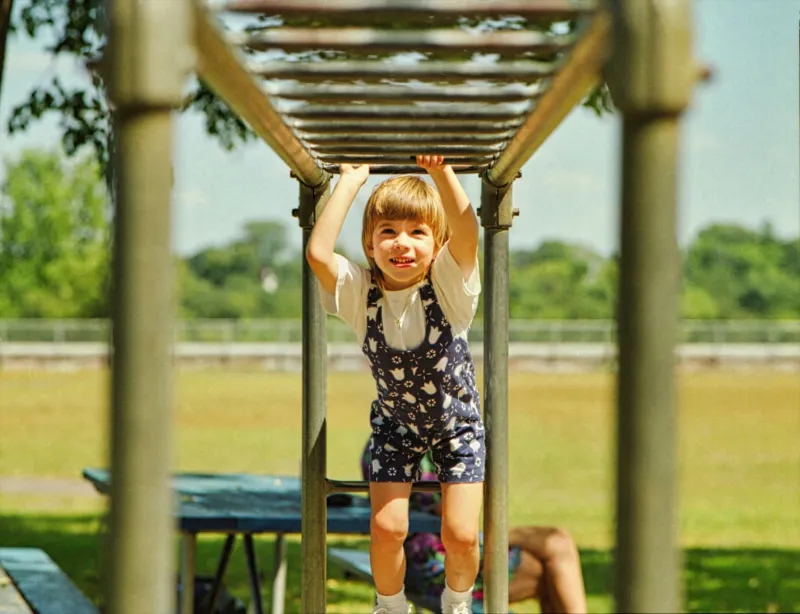
Indian childhood, particularly in previous generations, was characterized by unstructured outdoor play—street cricket, neighborhood games, walking to school, and the general physical freedom of outdoor community life. American childhood, by contrast, has become progressively more structured, supervised, and sedentary. Organized sports have replaced spontaneous play; screen-based entertainment competes with outdoor activity; safety concerns in some neighborhoods limit independent outdoor time.
For Indian American children navigating this environment, the health consequences of reduced physical activity compound over time. Encouraging daily outdoor time—even thirty to sixty minutes of unstructured play—represents a meaningful intervention that connects children to their physical environment while supporting cardiovascular, musculoskeletal, and mental health.
Where outdoor activity is limited by climate or safety, indoor movement practices drawn from Indian tradition—yoga, dance, and structured breathing exercises—offer culturally resonant alternatives that families can integrate into daily routines without requiring special equipment or facilities.
Bringing It Together
The American environment is neither hostile nor ideal; it is simply different from the one that shaped many of the wellness traditions Indian American families carry. The families who thrive in this context are those who engage that difference thoughtfully—preserving the wisdom embedded in their traditions while adapting its application to where their children actually live, breathe, and grow.