When the Dinner Table Becomes Complicated: Navigating Food Allergies and Cultural Identity in Indian American Families
In many Indian households, the act of feeding a child is inseparable from the act of loving them. Food carries the weight of generations—recipes passed from grandmother to mother, spices sourced from specific markets, dishes prepared for specific festivals, the smell of a particular curry that will define home for the rest of a child's life. To say that food is culturally significant in Indian communities is to dramatically understate the case. Food is identity. Food is belonging. Food is the primary language through which care is expressed.
When a child receives a food allergy diagnosis, that language becomes suddenly, painfully complicated.
For Indian American families, food allergies present a particular kind of difficulty—one that is simultaneously clinical and cultural, medical and emotional. Managing a peanut allergy is challenging in any household. Managing it in a household where groundnut oil is a cooking staple, where relatives press sweets containing unknown ingredients, where rejecting offered food carries genuine social weight—that is a different order of challenge entirely.
The Clinical Landscape: What Indian American Families Should Know
Food allergies affect approximately 8 percent of children in the United States, with peanut allergy representing one of the most common and most serious. Tree nut allergies, sesame allergies, and milk allergies round out the major categories relevant to South Asian dietary patterns.
Several of these allergens appear with notable frequency in traditional Indian cuisine. Peanuts and groundnut oil feature prominently in South Indian cooking, Maharashtrian snacks, and many chaat preparations. Cashews, pistachios, and almonds appear in Mughlai dishes, sweets, and celebratory foods. Sesame seeds are used in til laddoos, certain chutneys, and regional breads. Dairy—in the form of ghee, paneer, yogurt, and milk—is deeply woven into the fabric of Indian cooking across virtually all regional traditions.
A child with any of these allergies is not navigating a minor dietary inconvenience. They are navigating the potential exclusion from a significant portion of their cultural food heritage—and the management of that exclusion requires both medical rigor and cultural sensitivity.
It is worth noting that early introduction of allergenic foods—under pediatric guidance—has been shown to reduce allergy risk in high-risk infants. The LEAP study and subsequent research have established that introducing peanut products early in infancy (as early as four to six months in certain high-risk groups) significantly reduces the likelihood of peanut allergy development. Families with a strong family history of food allergies should discuss early introduction protocols with their pediatrician rather than defaulting to avoidance.
Managing Allergies Across Generations
One of the most delicate dimensions of food allergy management in Indian American families is the intergenerational dynamic. Grandparents and extended family members who did not grow up with awareness of food allergies as a clinical category may find the diagnosis difficult to fully accept. In communities where food is offered as an expression of love, declining that food—or restricting a grandchild's access to it—can feel like a rejection of the relationship itself.
This is not a problem unique to Indian families, but it takes on particular intensity given the central role of food in South Asian social life. A grandmother who has spent two days preparing a child's favorite mithai for a festival may genuinely struggle to understand why a tiny piece could be dangerous. The concept of anaphylaxis—a systemic, potentially fatal immune response—does not have a ready cultural analog in traditional Indian health frameworks.
Communicating about food allergies across generations requires patience, repetition, and a deliberate reframing. Rather than positioning allergy management as a rejection of tradition, families can frame it as the most loving possible act: protecting the child so they can participate in family life fully and safely. Providing grandparents and extended family with simple, written guidance—ideally in their home language—about safe and unsafe ingredients reduces the reliance on memory and removes ambiguity from high-stakes situations.
At Sukhayu Children's Hospital, we encourage families to involve grandparents and extended caregivers directly in allergy education appointments when possible. When the information comes from a physician rather than from a parent-child disagreement, it often carries greater weight and is received with less resistance.
Building Confidence in Cross-Cultural Settings
Indian American children spend much of their social lives in settings where their cultural food practices are already somewhat different from those of their peers—they may bring dal and rice to lunch while classmates eat sandwiches, or decline certain cafeteria options for dietary or religious reasons. A food allergy adds another layer of differentiation, and for children already navigating the complexities of bicultural identity, this additional distinction can feel isolating.
Research on food allergy and quality of life in children consistently identifies social anxiety as a significant burden—fear of accidental exposure at birthday parties, school events, and peer gatherings. For Indian American children, this anxiety can be compounded by the specific challenges of South Asian community events, where food is plentiful, ingredients are sometimes unlabeled, and declining to eat carries social meaning.
Building a child's confidence in managing their allergy in social settings is a gradual, deliberate process. Age-appropriate education about their own allergy—what it is, why it happens, and what to do if they feel symptoms—gives children agency rather than leaving them entirely dependent on adult vigilance. Role-playing scenarios for how to decline offered food politely but firmly, how to read labels, and how to communicate their needs to peers and adults prepares them for real situations.
For older children and teenagers, connecting with others who share similar experiences—through allergy support groups or online communities specifically oriented toward South Asian families—can provide a sense of solidarity that reduces isolation.
Adapting Traditional Recipes Without Losing Their Soul
One of the most constructive responses to a food allergy diagnosis is culinary adaptation—finding ways to preserve the flavors, textures, and cultural resonance of traditional dishes while eliminating the allergenic ingredient. This is not always simple, but it is more achievable than many families initially believe.
Sunflower seed butter can replace peanut-based preparations in certain contexts. Coconut milk or oat milk can substitute for dairy in many South Indian dishes. Seed-based chutneys can replace nut-based versions without significant flavor loss. Many traditional spice blends—the heart of Indian cuisine's identity—contain no common allergens and can be used freely.
Engaging an allergist or a registered dietitian with cultural competency in South Asian cuisine can be invaluable here. The goal is not to produce a pale imitation of traditional food but to preserve what makes those foods meaningful—the spices, the techniques, the occasions on which they are prepared—while removing the clinical risk.
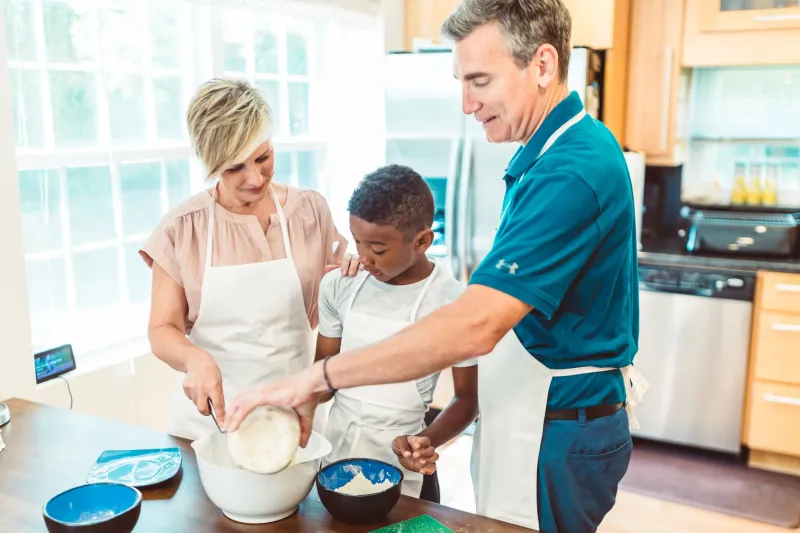
Cooking adaptations can also become a point of intergenerational connection rather than conflict. A grandmother and grandchild working together to develop a safe version of a beloved recipe creates a shared project that honors tradition while accommodating the child's medical reality.
A Note on Emergency Preparedness
For children with diagnosed IgE-mediated food allergies—particularly peanut, tree nut, or sesame allergies—carrying epinephrine auto-injectors (such as EpiPen) is a non-negotiable clinical requirement. Families should ensure that epinephrine is available not only at home but at school, at grandparents' homes, and at any regular caregiving location.
School staff, coaches, and extended family members who regularly care for an allergic child should be trained in recognizing anaphylaxis symptoms and in administering epinephrine. Many school districts have specific protocols for managing food allergies; parents should engage proactively with school nurses and administrators at the start of each academic year.
Identity, Belonging, and the Long View
A food allergy diagnosis reshapes, but need not diminish, a child's relationship with their cultural heritage. The essence of Indian food culture is not any single ingredient—it is the intention behind the cooking, the gathering around the table, the stories told while eating, the care embedded in every preparation.
Children who grow up understanding their allergy as a manageable condition rather than a defining limitation develop the confidence to participate fully in their cultural community while protecting their health. With the right medical guidance, family communication, and cultural creativity, the dinner table need not be a source of anxiety. It can remain what it has always been: a place of connection, nourishment, and belonging.