The Health That Happens at Home: Designing Your Family's Daily Environment for Long-Term Child Wellness

Photo by Photo by Hillshire Farm on Unsplash on Unsplash
Pediatric medicine is skilled at intervention. When a child is sick, the clinical system mobilizes impressively—diagnosis, treatment, follow-up. What it does far less well is influence the 8,700 or so hours each year that a child spends outside any medical setting, living inside the environment their family has created.
Those hours are not medically neutral. The rhythms of your household, the quality of air and light in your home, the emotional temperature at the dinner table, the sleep cues embedded in your evening routine—all of these shape your child's immune function, neurological development, and long-term health trajectory in ways that clinical interventions can rarely fully reverse. This is not alarmist; it is simply the science of how children's bodies develop.
For Indian American families, this reality arrives with a particular texture. You are managing the health infrastructure of a household that sits at the intersection of at least two cultural worlds, often with the additional complexity of multigenerational dynamics, high-achievement pressures, and the physical environment of American suburban or urban life. The opportunity within that complexity is significant—if it is approached intentionally.
Routine as Medicine
The single most undervalued health tool available to any family is the consistent daily routine. This is not a productivity concept; it is a biological one.
Children's bodies—particularly their immune, endocrine, and neurological systems—are regulated by circadian rhythms that respond powerfully to environmental cues. Consistent wake times, mealtimes, and sleep onset signals calibrate these systems in ways that random or variable schedules cannot. Research on pediatric sleep alone demonstrates that irregular sleep timing—even when total sleep hours are adequate—is associated with increased rates of obesity, impaired immune response, behavioral dysregulation, and reduced academic performance.
Indian families have long understood this intuitively. The Ayurvedic concept of dinacharya—the daily routine aligned with natural cycles—is essentially a circadian health protocol developed centuries before chronobiology existed as a field. Morning oil application, tongue scraping, warm water consumption, and structured mealtimes are not arbitrary rituals. They are environmental cues that orient the body's regulatory systems toward health.
The practical challenge for Indian American families is that American social and professional life tends to work against consistent routine. Late work schedules, after-school activity overload, and the ambient brightness of screens all disrupt the biological rhythms that dinacharya was designed to protect. Designing a household routine is, in part, an act of deliberate resistance against these structural pressures.
A starting point: Identify the three non-negotiable anchor points in your child's day—typically wake time, the evening meal, and sleep onset—and protect them as structural priorities rather than aspirational goals.
The Household as a Physical Environment
Beyond routine, the physical characteristics of your home have direct and measurable effects on children's health. This is an area where Indian American families in the United States face some specific considerations.
Air quality is among the most significant and least discussed. Many American homes, particularly in newer construction, are tightly sealed for energy efficiency in ways that trap indoor pollutants—volatile organic compounds from furniture and flooring, particulate matter from cooking, mold spores, and allergens. Indian cooking, while nutritionally rich, can generate significant levels of fine particulate matter, particularly when high-heat methods like tadka (tempering spices in hot oil) are used without adequate ventilation. Running a kitchen exhaust fan consistently during cooking, and ensuring cross-ventilation where possible, is a simple intervention with meaningful respiratory health implications for children.
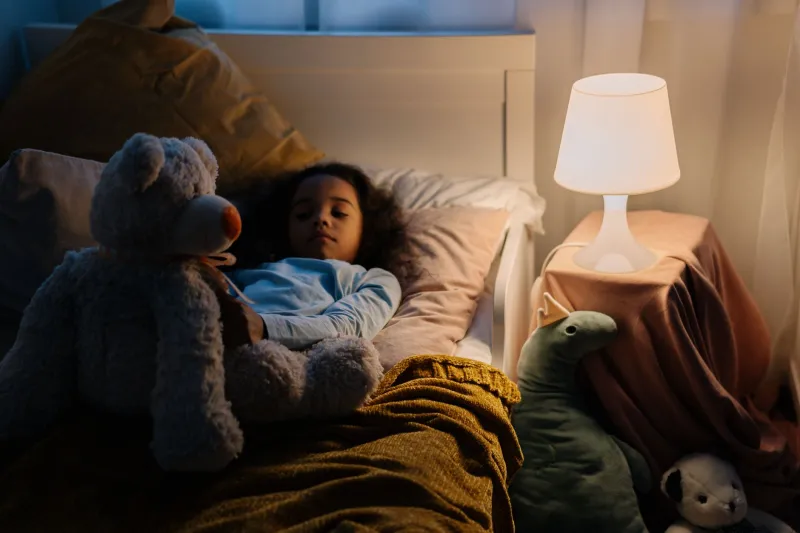
Light exposure follows a similarly underappreciated logic. Morning natural light is a powerful circadian signal that promotes alertness, mood regulation, and appropriate cortisol rhythms throughout the day. Evening artificial light—particularly the blue-spectrum light emitted by phones, tablets, and televisions—suppresses melatonin production and delays sleep onset. Many of the sleep difficulties that Indian American parents report in their children are, at least in part, a lighting problem masquerading as a behavioral one. Adjusting household light exposure in the hours before bed is a low-cost, high-impact environmental modification.
Household noise and sensory load also merit attention. Children who live in consistently high-stimulation environments—characterized by background television, frequent household conflict, or the ambient noise of dense urban living—show elevated baseline cortisol levels, which over time compromise immune function and behavioral regulation. Creating at least one period of deliberate quiet in the household each day is not a luxury; it is a health practice.
Family Stress as a Pediatric Health Variable
This point requires directness: the emotional climate of your household is a pediatric health variable. Children are not observers of family stress; they are participants in it, physiologically as well as psychologically.
Research on the biology of stress in children demonstrates that chronic exposure to household tension—parental conflict, financial anxiety that is openly expressed, high-pressure academic environments, or the stress of immigration-related uncertainty—activates children's hypothalamic-pituitary-adrenal axis in ways that, over time, alter immune function, gut microbiome composition, sleep architecture, and neurological development.
This is not an argument for pretending that families do not face genuine pressures. Indian American households often carry substantial burdens: the demands of sustaining professional success, the emotional labor of maintaining cultural identity, the navigation of intergenerational expectations, and the invisible weight of model-minority pressures that affect children as well as adults.
What it is an argument for is intentional stress management as a family health practice—not individually, but systemically. This might mean establishing household agreements about how conflict is expressed, creating protected family time that is insulated from performance and productivity pressures, or acknowledging openly with children that difficulty is a normal part of life rather than a sign of failure.
Intergenerational Dynamics as a Health Resource—and Risk
Many Indian American households include grandparents or extended family members who play active roles in children's daily care. This is a potential health asset of considerable magnitude. Children who have consistent, warm relationships with multiple generations of caregivers show stronger attachment security, greater emotional resilience, and—in some longitudinal studies—better long-term health outcomes.
At the same time, multigenerational households can introduce health-related tensions. Grandparents may hold health beliefs that conflict with current pediatric guidance—on topics ranging from fever management to dietary restrictions to physical activity. These disagreements, when handled poorly, introduce household stress and undermine the consistency of care that children's regulatory systems require.
Navigating these dynamics well requires neither capitulation nor confrontation. It requires the same translation skill discussed elsewhere in pediatric cultural competency: the ability to honor the wisdom embedded in traditional practices while clearly communicating the evidence that shapes contemporary medical recommendations. When grandparents understand why a particular guideline exists—rather than simply being told that tradition is wrong—the household is far more likely to reach durable consensus.
The Unglamorous Work of Prevention
None of what has been described here is dramatic. There are no supplements to purchase, no programs to enroll in, no devices to acquire. Consistent routines, adequate ventilation, managed light exposure, regulated household stress, and warm intergenerational relationships are profoundly ordinary—which is precisely why they are so often overlooked in favor of more visible wellness interventions.
The Sukhayu philosophy that underlies this hospital's approach to pediatric care has always understood that the deepest health is built in ordinary time, through ordinary choices, repeated with intention. The clinical encounter is important. The 8,700 hours between clinical encounters are where health is actually made.
Designing those hours thoughtfully is among the most consequential acts of parenting available to you.