Why Indian American Parents Ask Different Questions at the Pediatrician's Office — And Why That Matters
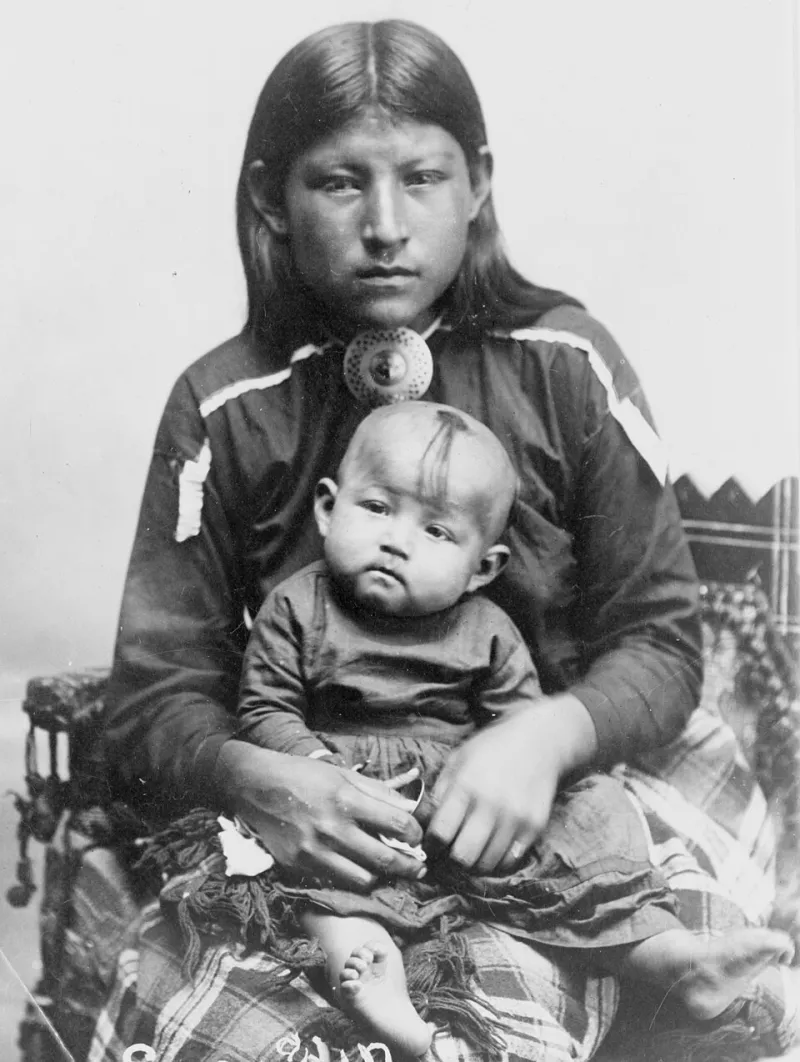
Photo: Drum, O., photographer, Public domain, via Wikimedia Commons
When Priya Nair brought her three-year-old son to a pediatric clinic in suburban New Jersey for the first time, the appointment did not go quite as the physician expected. Rather than asking about developmental milestones or upcoming vaccinations, Priya's first questions centered on her son's digestive constitution, whether his diet was "heating" his body, and what the doctor thought about a particular herbal supplement her mother-in-law had recommended from Chennai. The pediatrician, well-trained and well-meaning, was momentarily at a loss.
This scenario plays out in pediatric offices across the United States with increasing frequency. As the Indian American population continues to grow — now exceeding four million people — pediatric healthcare providers are encountering a distinct set of communication patterns, health philosophies, and family dynamics that do not always map neatly onto conventional Western clinical frameworks. Understanding these patterns is not simply a matter of cultural sensitivity. It is a matter of clinical effectiveness.
The Legacy of Pluralistic Medicine
For most Indian families, medicine has never been a single, monolithic system. Generations of Indian households have operated within a pluralistic health ecosystem — one that draws simultaneously from Ayurveda, Unani, Siddha, homeopathy, and allopathic medicine depending on the condition, the family's regional background, and the advice of trusted elders. This is not a sign of confusion or distrust toward modern medicine. It is, in fact, a deeply pragmatic orientation.
When Indian American parents bring this pluralistic mindset to a U.S. pediatric appointment, it often manifests as questions that seem tangential to the Western clinical agenda. Parents may inquire about whether a prescribed antibiotic will "weaken" their child's natural immunity over time, or whether a fever should be managed with medication or allowed to "run its course" according to traditional wisdom. These are not uninformed questions. They reflect a sophisticated, if differently organized, framework for thinking about health and illness.
Pediatric providers who recognize this context are far better positioned to engage meaningfully — and to ensure that families receive complete, accurate information without feeling dismissed.
Family as the Unit of Decision-Making
In mainstream American healthcare, the dominant model of medical decision-making is largely dyadic: the provider and the individual patient (or, in pediatrics, the parent acting as proxy). In many Indian families, however, health decisions are embedded in a broader network of familial authority. Grandparents, in particular, often hold significant influence over questions of child-rearing and health management.
This means that a pediatrician may reach a clear agreement with a parent during an office visit, only to discover at the next appointment that the plan was modified after consultation with the child's grandmother back in India or living in the same household. For providers unfamiliar with this dynamic, the situation can feel like non-compliance. For the family, it is simply how important decisions get made.
At Sukhayu Children's Hospital, our clinical philosophy acknowledges that nurturing a child's health means nurturing the family system around that child. Providers who ask open-ended questions — such as "Who else at home helps you make decisions about your child's health?" or "Is there anyone else whose opinion is important to you as you think about this plan?" — create space for these dynamics to be acknowledged rather than worked around.
Health Literacy Is Not the Same as Medical Compliance
One of the most persistent misconceptions in cross-cultural pediatric care is the conflation of health literacy with compliance. Indian American parents, as a demographic group, tend to be highly educated. Many hold advanced degrees and work in scientific, engineering, or medical fields themselves. Their questions at the pediatrician's office are rarely the product of ignorance. They are frequently the product of a different knowledge system — one that is internally coherent, even when it diverges from evidence-based Western medicine.
Consider the question of nutrition. Indian dietary frameworks, whether rooted in Ayurvedic principles or simply in regional culinary tradition, often assign specific foods therapeutic or harmful properties based on qualities like warmth, heaviness, or digestibility. A parent who asks whether a child's recurrent colds might be related to excessive consumption of "cold" foods is not being superstitious. They are applying a logical framework to a clinical observation. The most productive response is not dismissal but dialogue — acknowledging the parent's reasoning and then offering the best available evidence in a way that respects, rather than overrides, their existing understanding.
The Questions Behind the Questions
Experienced pediatric providers often note that the most revealing part of an appointment with an Indian American family is not what is asked directly, but what lies beneath the surface of the question. A parent who asks repeatedly about a child's weight may be navigating pressure from extended family members who associate a child's chubbiness with health and prosperity — a cultural value that conflicts directly with current American pediatric guidelines on childhood obesity.
Similarly, questions about academic performance, sleep schedules, and behavioral concerns are frequently shaped by cultural expectations around achievement, obedience, and temperament that differ meaningfully from mainstream American norms. A child described by a teacher as "quiet and compliant" may be celebrated at home; a child described as "assertive and independent" may be a source of parental anxiety rather than pride.
Providers who understand these undercurrents can ask better follow-up questions, offer more relevant guidance, and avoid inadvertently shaming families whose values are simply different — not deficient.
Building Bridges in the Examination Room
The good news is that the communication gap between Indian American families and American pediatric providers is entirely bridgeable. Several practical strategies have proven effective in clinical settings.
Ask before assuming. Rather than presuming that a family is using traditional remedies, ask openly and without judgment. Phrases like "Many families I work with use a combination of approaches for their children's health — is that something you do as well?" normalize the conversation and invite honesty.
Acknowledge the framework, then expand it. When a parent raises a concept rooted in traditional medicine, engage with it thoughtfully before redirecting. This does not mean validating every claim uncritically — it means demonstrating respect for the reasoning process before introducing alternative evidence.
Invite the extended family into the conversation, appropriately. When grandparents or other relatives are present at appointments, address them respectfully and include them in age-appropriate parts of the discussion. Excluding them from the conversation rarely reduces their influence; it simply pushes that influence outside the clinical space.
Provide written materials in accessible formats. Many Indian American families appreciate detailed, written explanations that they can review at home and share with family members. Clear, jargon-free summaries of clinical recommendations help families build consensus across generational lines.
A Partnership, Not a Prescription
The pediatric appointment, at its best, is a collaborative conversation — a meeting point between the family's lived knowledge of their child and the provider's clinical expertise. For Indian American families navigating two distinct medical traditions simultaneously, that conversation requires a particular kind of attentiveness on both sides.
Parents who understand how their own cultural frameworks shape their questions are better equipped to communicate their concerns clearly and to evaluate the guidance they receive. Providers who understand those frameworks are better equipped to offer care that is not merely technically correct, but genuinely received.
At Sukhayu Children's Hospital, we believe that every question a parent asks — however unfamiliar it may seem — is an expression of love for their child. Our role is to meet that love with knowledge, patience, and the kind of cultural fluency that makes genuine healing possible.