Raising Emotionally Resilient Children: A Culturally Grounded Mental Health Framework for Indian American Families

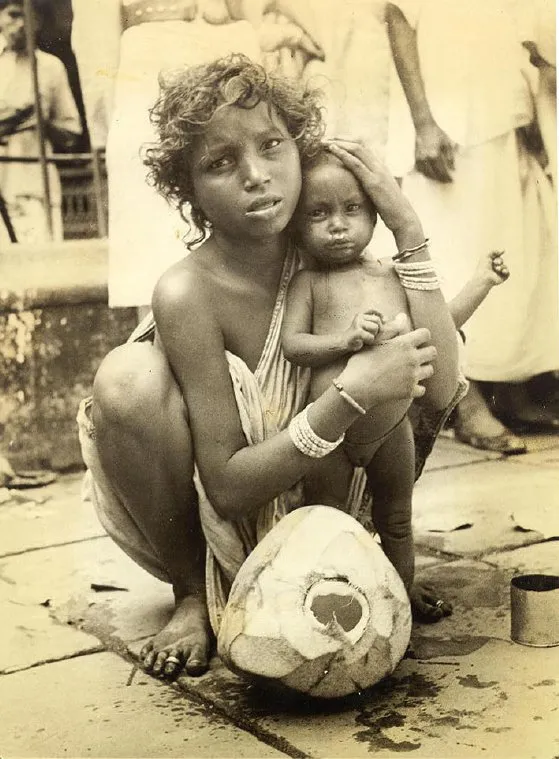
Photo: Benjamin West, Public domain, via Wikimedia Commons
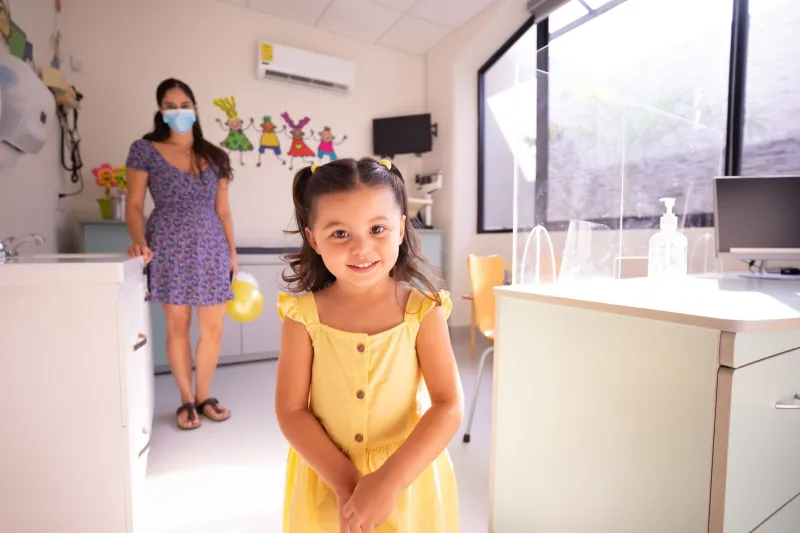
In the waiting rooms and consultation spaces of pediatric practices across the United States, a quiet but significant conversation is taking place. Indian American parents — many of whom navigated extraordinary academic and professional journeys to build lives here — are increasingly asking their children's providers a question that would have been rarely voiced a generation ago: Is my child emotionally okay?
It is a question that deserves a serious, nuanced answer. And at Sukhayu Children's Hospital, we believe that answer must account for both the science of child mental health and the lived reality of growing up South Asian in America.
Understanding the Specific Pressures Indian American Children Carry
Research consistently identifies South Asian American youth as a population with elevated rates of anxiety, depression, and identity-related distress — yet one that is significantly underrepresented in mental health service utilization. A 2020 study published in the Asian American Journal of Psychology found that South Asian adolescents reported higher levels of academic pressure and family-related stress than many of their peers, while simultaneously being less likely to seek professional support.
Several intersecting pressures contribute to this profile:
Perfectionism rooted in high-expectation households. The emphasis on academic excellence in many Indian American families is not arbitrary — it reflects a deeply held belief that education is both protection and opportunity. However, when children internalize the message that performance equals worth, the psychological cost can be considerable. Anxiety disorders, fear of failure, and chronic stress responses are common downstream effects.
Bicultural identity strain. Children who move between two distinct cultural environments daily — an Indian household and an American school — often experience what psychologists call acculturative stress. The effort of code-switching, managing different sets of behavioral expectations, and navigating questions of belonging can be emotionally exhausting, particularly during adolescence.
Emotional suppression within family hierarchies. Many South Asian family structures prioritize collective harmony and respect for elders, which are genuinely valuable relational norms. However, these same structures can inadvertently communicate to children that expressing difficult emotions — sadness, anger, confusion — is disrespectful or disruptive. When children have no sanctioned outlet for emotional processing, those feelings do not disappear; they simply go underground.
What Evidence-Based Psychology Offers
Modern child psychology provides several well-validated frameworks that are directly applicable to these challenges. The good news for Indian American families is that these approaches do not require dismantling cultural values — they require adapting them.
Cognitive Behavioral Therapy (CBT) remains one of the most rigorously studied interventions for childhood anxiety and depression. At its core, CBT teaches children to identify unhelpful thought patterns and replace them with more balanced perspectives. For a child who believes that a single poor grade signals permanent failure, CBT offers concrete tools for challenging that narrative. Parents can reinforce these skills at home by modeling reflective thinking — narrating their own problem-solving processes aloud and normalizing mistakes as information rather than indictments.
Acceptance and Commitment Therapy (ACT), an evidence-based extension of CBT, teaches children to acknowledge difficult emotions without being controlled by them. This framework is particularly well-suited to bicultural children, who often experience genuine, irresolvable tensions between two worlds. ACT does not promise resolution — it builds the psychological flexibility to carry complexity without being destabilized by it.
Mindfulness-based interventions have accumulated a strong evidence base in pediatric populations. Practices such as focused breathing, body scans, and present-moment awareness have been shown to reduce anxiety symptoms and improve emotional regulation in school-age children and adolescents. Importantly, mindfulness carries deep roots in South Asian philosophical traditions, making it a natural bridge between cultural heritage and contemporary mental health practice.
Honoring Cultural Strengths While Creating Space for Emotional Expression
One of the most consequential shifts Indian American parents can make is reframing emotional expression — not as a challenge to family authority, but as a form of relational trust. When a child feels safe enough to say I am overwhelmed or I feel like I do not belong anywhere, that is not weakness or disrespect. It is a child reaching toward the people they trust most.
Practical strategies for cultivating this environment include:
-
Designated family check-in rituals. Setting aside even ten minutes during dinner or before bed for each family member — including parents — to share one thing that was hard and one thing that was good normalizes emotional disclosure as a family practice rather than a crisis response.
-
Separating performance from identity in daily language. Phrases such as "You worked so hard on that" rather than "You are so smart" or "You are a failure" reinforce that a child's value is not contingent on outcomes. This is a small linguistic shift with substantial psychological impact.
-
Engaging extended community as a protective resource. The South Asian emphasis on community — whether through temple, cultural organizations, or multigenerational family networks — is a genuine mental health asset. Research on resilience consistently identifies strong social connectedness as a buffer against psychological distress. Rather than viewing community involvement as a distraction from individual achievement, families can intentionally frame it as a source of belonging and stability.
-
Consulting culturally informed providers. When professional support is warranted, seeking therapists who have experience working with South Asian families can significantly improve engagement and outcomes. A provider who understands the weight of family honor, immigration sacrifice, and bicultural navigation will ask different — and more useful — questions.
When to Seek Professional Support
It is important to distinguish between the normal pressures of childhood and clinical-level distress that warrants professional evaluation. Parents should consult a pediatric mental health provider if their child exhibits persistent changes in sleep or appetite, withdrawal from activities they previously enjoyed, declining academic performance accompanied by emotional distress, expressions of hopelessness, or any mention of self-harm.
At Sukhayu Children's Hospital, we encourage families to think of mental health consultations with the same matter-of-fact approach they bring to annual well-child visits. Seeking support is not an admission of failure — it is an act of informed, loving care.
A Foundation Built on Both Roots and Evidence
The children growing up in Indian American households today are navigating a world of genuine complexity. They deserve a mental health framework that takes that complexity seriously — one that draws from the best of contemporary psychological science and the enduring strengths of South Asian family culture.
Building emotional resilience is not a single conversation or a single intervention. It is the cumulative effect of daily choices: how families talk about feelings, how they respond to struggle, and how they communicate that a child's worth is unconditional. At Sukhayu Children's Hospital, we are committed to supporting families in making those choices with both confidence and care.