Two Generations, Two Medicines: A Pediatrician's Guide to Navigating Family Health Disagreements With Grace
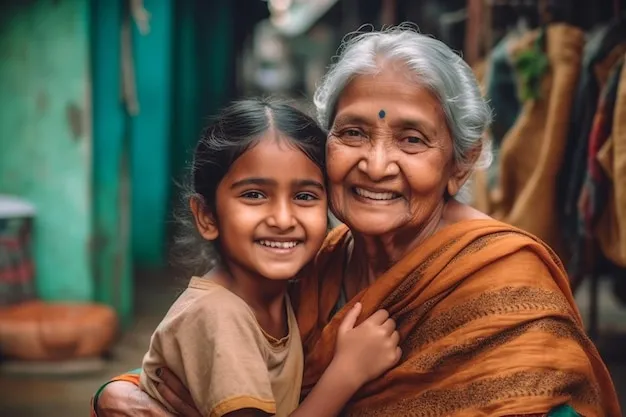
Photo: Indian grandmother mother child healthcare home multigenerational family, via img.freepik.com
The scenario is familiar to a significant number of Indian American parents. Your toddler develops a fever on a Thursday evening. You call the pediatrician's after-hours line and receive clear guidance: monitor temperature, ensure hydration, administer age-appropriate acetaminophen if the child is uncomfortable. You hang up feeling reasonably settled.
Then your mother-in-law, visiting from Hyderabad, appears in the doorway with a small bowl of warm castor oil and a firm expression.
What happens next — the negotiation, the tension, the guilt, the quiet compromise — plays out in households across America with remarkable consistency. At Sukhayu Children's Hospital, we believe this moment does not have to be a conflict. With the right framework, it can become something more valuable: a conversation.
Why These Conflicts Happen — and Why They Are Not Irrational
It would be easy, and wrong, to frame multigenerational health disagreements as a simple contest between superstition and science. The reality is considerably more layered.
Grandparents who grew up in India in the mid-twentieth century often raised children through circumstances where modern medical infrastructure was limited, expensive, or geographically inaccessible. The home remedies they relied upon were not chosen out of ignorance — they were chosen out of necessity, ingenuity, and accumulated community knowledge. Many of those remedies worked well enough to raise healthy families. That lived experience carries genuine authority, and it deserves to be acknowledged rather than dismissed.
At the same time, pediatric medicine has advanced substantially. Evidence-based protocols exist for fever management, allergy diagnosis, sleep safety, and dozens of other domains where practices from a generation ago are now understood to carry measurable risks. A pediatrician's recommendations are not bureaucratic interference — they reflect decades of clinical research and outcome data.
The parent standing between these two realities is not being unreasonable when they feel pulled in both directions. They are navigating a genuine tension between two legitimate systems of knowledge.
Scenario One: The Fever That Divides the Room
Fever management is perhaps the most common flashpoint. In many Indian households, a child's fever is treated as an urgent emergency requiring immediate and aggressive intervention — warm oil massages, specific herbal decoctions, or the avoidance of bathing. Western pediatric guidance, by contrast, emphasizes that fever itself is not dangerous in most healthy children; it is a sign that the immune system is actively responding to infection. The focus is on comfort rather than temperature suppression.
For parents navigating this gap, a few principles are worth holding firmly:
What the evidence supports: Fever-reducing medications (acetaminophen or ibuprofen, age-appropriately dosed) are appropriate when a child is visibly uncomfortable — not simply because the thermometer reads above a certain number. A fever of 101°F in a child who is playing and drinking normally requires monitoring, not emergency intervention.
Where traditional practices may be safely accommodated: Gentle comfort measures — light clothing, a calm environment, warm fluids — are consistent with both traditional Indian care and modern pediatric guidance. There is no conflict in offering these alongside standard monitoring.
What requires a firm boundary: Aspirin should never be given to children under eighteen due to the risk of Reye's syndrome. Certain herbal preparations may interact with medications or cause harm in young children. These are non-negotiable limits, and framing them as such — calmly, without judgment — is appropriate.
Scenario Two: Food Allergies and the Pressure to "Just Try It"
Food allergy management presents a different kind of tension. In many South Asian families, the idea that a child might be genuinely allergic to a food — particularly a staple like peanuts, dairy, or wheat — can be met with skepticism. Elders may interpret avoidance as overprotective parenting, or may not fully understand the difference between a mild intolerance and an IgE-mediated allergic response that can progress to anaphylaxis.
This is a situation where clear, concrete communication with family members is essential — and where involving the pediatrician directly can help.
When grandparents or extended family are present as caregivers, consider requesting a brief written summary from your child's allergist that can be shared with them. Visual aids, translated if necessary, can communicate the seriousness of an allergy in ways that a parent's verbal explanation sometimes cannot. Framing it as "the doctor has said this specifically" can, in some family dynamics, carry more weight than the parent's own instructions — and that is a resource worth using.
For families managing severe allergies, ensuring that any adult responsible for the child's care knows how to recognize and respond to allergic symptoms — and where the epinephrine auto-injector is kept — is a safety requirement, not a preference.
Scenario Three: Sleep Practices and the Co-Sleeping Conversation
Sleep is another domain where traditional Indian parenting norms and American pediatric guidance diverge meaningfully. Co-sleeping is normative and deeply embedded in South Asian family culture. The idea of placing an infant in a separate room — or even a separate sleep surface — can feel not only strange but actively unkind to grandparents who raised children in close physical proximity.
The American Academy of Pediatrics recommends room-sharing without bed-sharing for infants under one year, based on evidence linking certain co-sleeping arrangements to increased risk of sleep-related infant death. This recommendation is grounded in data and should be taken seriously.
However, the conversation with family members does not need to be framed as a rejection of traditional values. Room-sharing — having the infant sleep in a bassinet or crib near the parents' bed — honors the spirit of closeness that multigenerational sleeping arrangements have always represented. Many families find this a genuinely workable middle ground that satisfies both safety requirements and cultural comfort.
A Framework for Respectful Decision-Making
Across all of these scenarios, a few consistent principles can guide parents through the discomfort of disagreement:
Name the shared goal first. Every person in the room — parent, grandparent, pediatrician — wants the child to be healthy and safe. Beginning from that common ground changes the tone of the conversation before it starts.
Distinguish between risk levels. Not every traditional practice carries clinical risk. Some are neutral; some are genuinely beneficial. Reserve firm limits for situations involving documented safety concerns, and allow flexibility everywhere the evidence permits.
Invite elders into the medical relationship. When grandparents accompany families to well-child visits at Sukhayu, they are welcome. Hearing guidance directly from a physician, in a respectful clinical setting, often lands differently than it does across a kitchen table. Our providers are accustomed to, and genuinely interested in, these multigenerational conversations.
Give yourself permission to be the parent. Ultimately, the decisions about a child's medical care belong to the parents. Honoring elders does not require ceding authority over a child's health. These two things can coexist.
The Deeper Purpose of These Conversations
Multigenerational health disagreements, handled thoughtfully, offer something beyond conflict resolution. They are an opportunity to build a more complete picture of a child's health — one that draws on the pattern recognition of experienced grandparents, the cultural continuity of traditional practices, and the evidence base of modern pediatric medicine.
At Sukhayu Children's Hospital, we do not see these conversations as problems to be managed. We see them as part of what it means to nurture a child within a family, across cultures, and across generations. We are here to support that process — with clinical expertise, cultural understanding, and genuine respect for the complexity of the families we serve.